




Jewelry allergies, especially nickel allergies, can cause skin irritation, including rashes, itching, redness, and sometimes blisters. Symptoms vary from mild to severe and can potentially spread beyond the contact areas. Early treatment is important to manage symptoms and avoid complications. For comprehensive care and personalized treatment for metal allergies, Penn Medicine Becker ENT & Allergy is ready to provide optimal treatment and ongoing allergy management.
 Important Medical Notice
The information provided below and throughout this website is presented for general educational purposes only and does NOT constitute professional medical advice. This information is NOT a substitute for professional medical advice and NO material on this site is intended to be a substitute for professional medical advice. Always seek the guidance of your doctor or other qualified health professional with any questions you may have regarding a health or a medical condition. Never disregard the advice of a medical professional or delay in seeking it because of something you have read on this website.
How to Overcome Metal Allergies: What You Need to Know
- Nickel and cobalt in jewelry commonly trigger allergic contact dermatitis (ACD), causing skin irritation and rashes.
- Symptoms of metal allergy include redness, itching, and potential blistering in severe cases.
- Hypoallergenic options like platinum, high-karat gold, and nickel-free jewelry can help prevent allergic reactions.
- Early treatment with corticosteroid creams or oral antihistamines can reduce inflammation and discomfort.
- Penn Medicine Becker ENT & Allergy provides expert diagnosis and treatment for metal-related allergies.
Why Does Jewelry Cause Skin Irritation?
Common Metals That Cause Allergic Reactions
Skin oils, sweat, or moisture can react with certain metals, causing a mild rash or itching, and some people have allergic reactions to even trace amounts of certain metals, such as:
- Nickel: Widely used in costume jewelry, watchbands, and belt buckles, nickel is one of the most frequent causes of metal allergies.
- Cobalt: Found in metal alloys and sometimes used in jewelry, cobalt can cause skin irritation and allergic reactions.
- Chromium: Often present in leather items and stainless steel, chromium exposure can result in contact dermatitis.
Symptoms of Metal Allergy from Jewelry
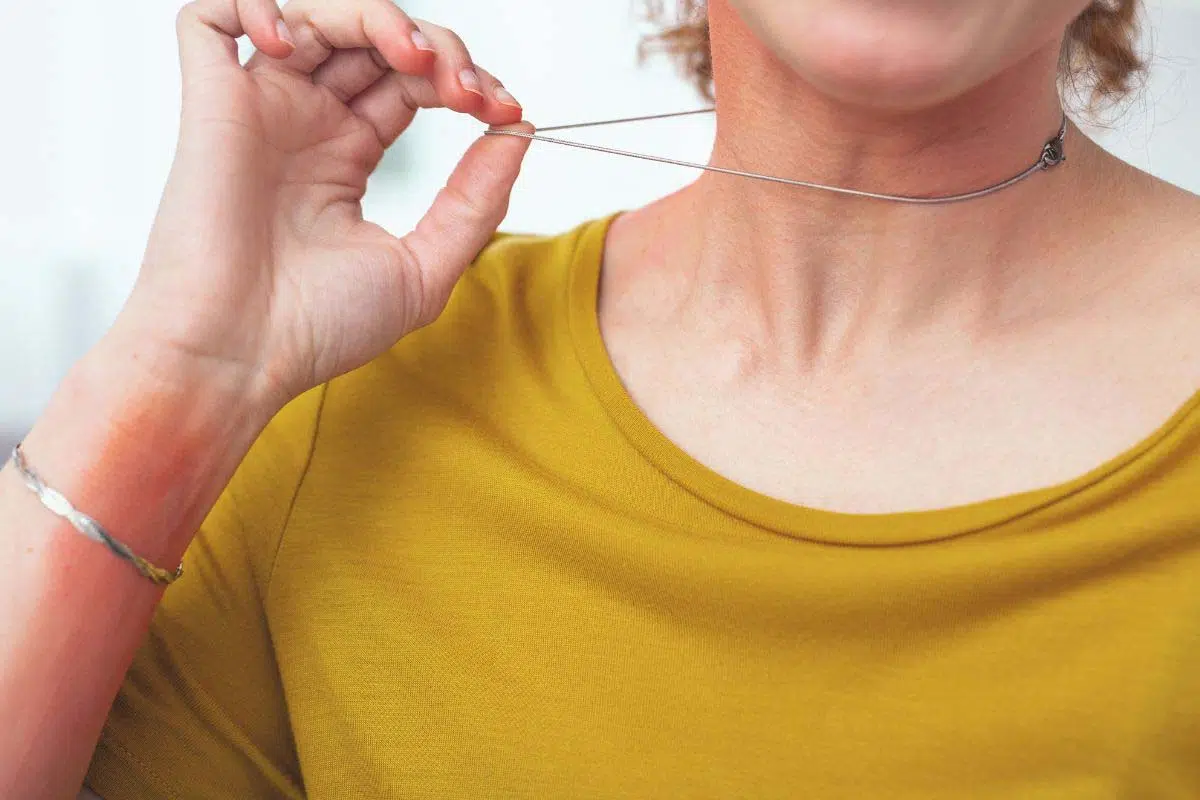
Wearing jewelry with nickel or cobalt can trigger allergic contact dermatitis in sensitive individuals.
Symptoms include:
- Itchy rash.
- Redness.
- Blisters on ears, neck, wrists, or fingers.
- Burning and stinging.
Prolonged exposure may cause chronic dermatitis, leading to persistent inflammation, dryness, and discomfort.
How Different Types of Jewelry Can Trigger Metal Allergies
Different types of jewelry can cause varying allergic reactions, such as:
- Rings: Continuous contact and trapped moisture can cause dryness, cracking, or rashes around the finger.
- Earrings and Piercings: Common triggers, especially with nickel-containing metals, causing redness, swelling, or itching. Reactions are more frequent in new piercings.
- Watches and Bracelets: Friction and sweat increase irritation risks, particularly from nickel or cobalt. Red, itchy rashes often appear on the wrist.
- Necklaces: Movement and sweat buildup can trigger rashes, itching, or skin discoloration over time.
Manage metal allergy symptoms now!
Prevent further irritation and other discomforts with a tailored treatment by New Jersey and Philadelphia allergy experts.
How Metal Allergy Leads to Allergic Contact Dermatitis
Long-Term Impact on Skin
Several factors can increase skin sensitivity, making individuals more prone to developing allergic contact dermatitis from metal exposure:

- Frequent Exposure: Repeated contact with nickel or other metals through jewelry or personal items.
- Sweating: Moisture enhances the absorption of metal ions, worsening reactions.
- Compromised Skin Barrier: Dry, cracked, or damaged skin is more vulnerable to allergens.
- Existing Allergies or Eczema: Individuals with these conditions are at higher risk.
- Prolonged Wear: Continuous wear of metal-containing jewelry increases the chance of allergic reactions.
Contacting an expert allergist can help manage these factors and reduce the severity of these ACD symptoms.
Effective Treatments for Metal Allergy
The medical evaluation by Penn Medicine Becker & Allergy experts may include:
- Diagnosis: Involves medical history, physical exams, and patch testing to identify metal allergies.
- Additional Testing: Blood tests may be used if further confirmation is needed.
- Treatment Plans: Focus on avoiding metal triggers and switching to hypoallergenic alternatives.
- Medications: Includes antihistamines or corticosteroids to control symptoms.
- Advanced Treatments: In severe cases, stronger medications or immunotherapy may be recommended.
Treatment Options for ACD
Penn Medicine Becker ENT & Allergy offers many treatment options for ACD, including:
- Allergen Avoidance: Adjust personal items to avoid metals like nickel, cobalt, and chromium.
- Topical Corticosteroids: Manage inflammation and itching safely.
- Oral Antihistamines: Relieve allergic symptoms, complementing topical treatments.
- UV Light Therapy: Controls immune responses and reduces inflammation.
- Phototherapy: Treat persistent skin inflammation with targeted light.
- Immunosuppressants: Manage severe cases with monitored medications.
- Allergy Shots: Build tolerance to metals, reducing flare-ups.
Connecting with an expert allergist can help you choose the most effective treatment option for relief and make sure you receive targeted, appropriate care for your symptoms.
Benefits of Early Treatment
Seeking prompt treatment for metal allergies is crucial to prevent worsening symptoms. Here’s why early care matters:
- Prevents Escalation: Stops mild reactions from becoming chronic.
- Avoids Complications: Reduces risk of infections from scratching.
- Minimizes Discomfort: Relieves itching and swelling quickly.
- Improves Outcomes: Ensures effective, tailored treatment.
Acting quickly ensures a faster recovery!
Keep allergic reactions under control and avoid long-term issues by having the right treatment.
Why Penn Medicine Becker ENT & Allergy Is Your Go-To Solution
Penn Medicine Becker ENT & Allergy in New Jersey focuses on diagnosing and treating allergic contact dermatitis from metal allergies. Our board-certified experts identify the specific metals causing reactions and develop personalized treatment plans to minimize exposure and relieve symptoms, enhancing comfort and quality of life.
If you have symptoms like itchy rash, redness, or blisters after wearing jewelry, contact Penn Medicine Becker ENT & Allergy. We offer complete care and expert advice on how to manage your metal allergy.
Talk with our Allergy Experts
Set up an appointment with Penn Medicine Becker ENT & Allergy, serving multiple locations in New Jersey and Philadelphia. In-person visits and telemedicine options make it easy to get expert care.
Use the contact page to request an appointment or call directly to connect with our team and schedule a time that works best for you.