




Parasomnias
Evaluation and treatment for unusual behaviors or experiences during sleep.
- Care for sleepwalking, night terrors, nightmares, and sleep paralysis.
- Assessment of injury risk and underlying sleep disorders.
- Personalized management for children and adults.
- Same-day or next-day appointments often available.








Important Medical Notice
The information provided below and throughout this website is presented for general educational purposes only and does NOT constitute professional medical advice. This information is NOT a substitute for professional medical advice and NO material on this site is intended to be a substitute for professional medical advice. Always seek the guidance of your doctor or other qualified health professional with any questions you may have regarding a health or a medical condition. Never disregard the advice of a medical professional or delay in seeking it because of something you have read on this website.
At Penn Medicine Becker ENT & Allergy, our experienced ENT doctors understand that parasomnias can be disruptive and distressing for both patients and their families. A thorough evaluation helps identify the type of parasomnia present, assess any contributing factors — including airway-related sleep disruption — and determine whether treatment is warranted.
What Are Parasomnias?
Circadian rhythm sleep-wake disorders are a category of conditions defined by a persistent misalignment between a patient’s internal biological clock and the sleep-wake schedule required by their environment, work, or social obligations. The sleep itself is not necessarily of poor quality — the problem is primarily one of timing. Patients often find that when they are allowed to sleep on their own schedule, they sleep relatively normally. The difficulty arises when external demands require them to sleep and wake at times that conflict with their internal clock.
These disorders vary in their cause and presentation, but they share a common thread: the body’s natural timing system is out of step with the world around it.
NREM-Related Parasomnias?
NREM-related parasomnias arise during the deeper stages of sleep — most commonly during slow-wave sleep (N3) — and tend to occur in the first third of the night when deep sleep is most abundant. They are characterized by partial arousal states in which the patient appears to be awake but is not fully conscious, and typically has no memory of the episode the following morning.
-
Sleepwalking (Somnambulism)
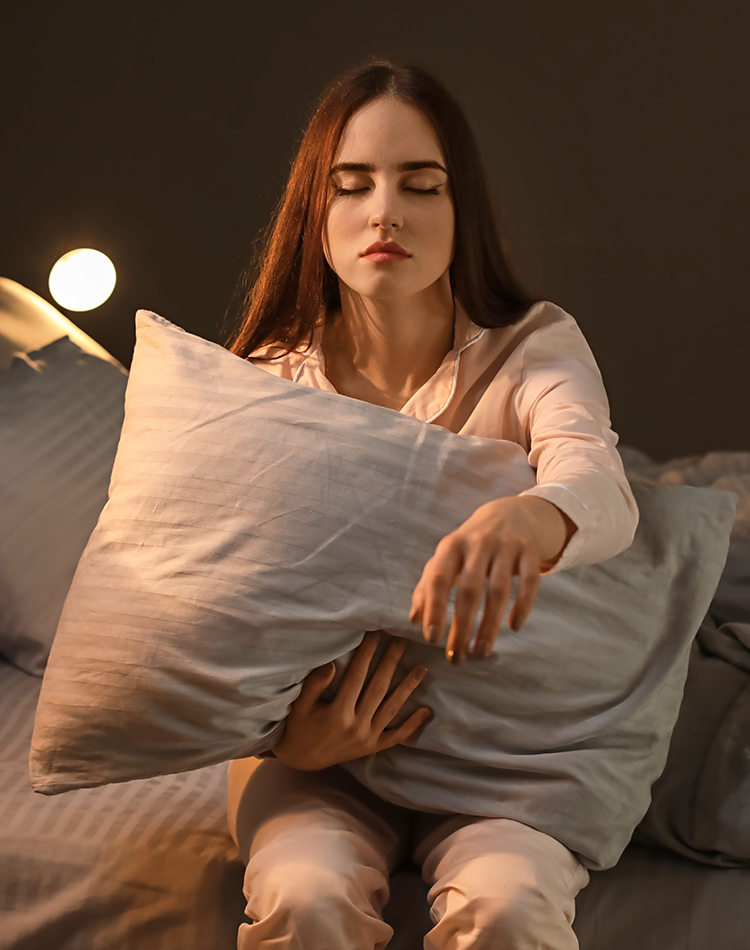
Sleepwalking involves complex motor behaviors performed during sleep — walking, navigating the environment, or even carrying out routine tasks — while the individual remains in a state of incomplete arousal. Sleepwalkers are typically unresponsive to their surroundings and may be difficult to redirect. While sleepwalking is common in children and often diminishes with age, it can persist into adulthood or emerge for the first time in later life. In adults, episodes are sometimes associated with:
- Sleep deprivation or irregular sleep schedules
- Certain medications, particularly sedative-hypnotics
- Stress or significant life changes
- Untreated sleep-disordered breathing
-
Sleep Terrors
Sleep terrors, sometimes called night terrors, involve sudden and intense episodes of apparent fear during sleep — typically accompanied by screaming, an elevated heart rate, and signs of autonomic arousal such as sweating and rapid breathing. Despite appearing terrified and distressed, the individual is not fully conscious and typically has no memory of the episode in the morning. Sleep terrors occur during NREM sleep, which distinguishes them from nightmares, and are more common in children. In adults, they may be associated with stress, fever, sleep deprivation, or disrupted sleep architecture from an underlying sleep disorder.
-
Confusional Arousals
Confusional arousals occur when an individual wakes from deep sleep but remains in a disoriented, semi-conscious state for several minutes. They may appear awake and respond to questions, but their responses are confused or inappropriate, and they will have no recollection of the episode afterward. Confusional arousals are relatively common and generally benign, particularly in children. In adults, they may be triggered by abrupt awakening, shift work schedules, alcohol use, or sleep deprivation.
REM-Related Parasomnias
REM-related parasomnias emerge during REM sleep — the stage associated with vivid dreaming. Under normal circumstances, the body enters a state of muscle paralysis during REM sleep to prevent physical movement in response to dream content. When this paralysis is absent or incomplete, or when transitions between REM sleep and wakefulness are disrupted, the result can range from physically enacted dreams to the experience of being conscious but unable to move.
REM Sleep Behavior Disorder (RBD)
REM Sleep Behavior Disorder occurs when the normal muscle paralysis of REM sleep is absent, allowing patients to physically act out their dreams. Episodes may involve talking, shouting, punching, kicking, or falling out of bed, and they can pose a risk of injury to the patient or their bed partner. RBD is more commonly seen in older adult males and carries significant clinical importance beyond the sleep disorder itself — it is associated with an increased risk of certain neurodegenerative conditions, including Parkinson’s disease, Lewy body dementia, and multiple system atrophy. In some individuals, RBD precedes the motor or cognitive symptoms of these conditions by many years, making early evaluation and follow-up particularly important.
Recurrent Isolated Sleep Paralysis
Sleep paralysis occurs when consciousness returns during a REM sleep episode before normal muscle tone has been restored. The individual is aware of their surroundings but is temporarily unable to move or speak. Episodes are typically brief — lasting from seconds to a few minutes — but can be accompanied by intense fear and, in some cases, vivid hallucinations or a sense of a presence in the room. Isolated episodes of sleep paralysis are common in the general population and are not considered a disorder on their own. Recurrent isolated sleep paralysis is diagnosed when episodes occur frequently enough to cause significant distress or impairment.
Nightmare Disorder
While nightmares are a universal human experience, nightmare disorder is diagnosed when vivid and disturbing dreams occur with sufficient frequency to cause significant distress or functional impairment. Nightmares occur during REM sleep and are typically recalled in detail upon awakening, distinguishing them from sleep terrors. The condition is more prevalent following trauma and is a central feature of post-traumatic stress disorder (PTSD). Effective treatment options are available, including imagery rehearsal therapy and, in some cases, targeted pharmacological approaches.
Other Parasomnias
- Exploding Head Syndrome
Despite its alarming name, Exploding Head Syndrome is a benign condition in which a patient perceives a sudden loud noise — such as a bang, crash, or explosion — in the moments of falling asleep or waking. There is no physical sound and no pain associated with the experience, though it can be startling and may contribute to sleep anxiety if episodes recur frequently. The mechanism is not fully understood but is thought to involve a disruption in the brain’s process of transitioning into or out of sleep. Reassurance that the condition is benign is often the most important aspect of management.
- Sleep-Related Eating Disorder
Sleep-Related Eating Disorder (SRED) involves recurrent episodes of eating during partial arousals from sleep, often with little or no conscious awareness. Patients may consume unusual food combinations, eat rapidly, and have little or no memory of the episode in the morning. SRED has been associated with certain medications — particularly sedative-hypnotics — as well as underlying sleep disorders including sleepwalking and restless legs syndrome. It carries risks related to unintended caloric intake, potential ingestion of inedible or hazardous substances, and injury during food preparation while in a semi-conscious state.
Clinical Variables Measured During a Sleep Study
When a patient undergoes a sleep study for suspected parasomnia, the evaluation focuses on identifying the sleep stage in which episodes occur and understanding what may be disrupting normal sleep architecture. The following variables are assessed:
- Sleep Architecture (N1, N2, N3, REM): The distribution of sleep stages throughout the night is central to parasomnia evaluation. NREM parasomnias arise from N3 sleep, while REM parasomnias occur during REM sleep. Identifying which stage is involved helps confirm the diagnosis and guides treatment.
- Arousal Index: The number of times per hour the brain briefly activates out of sleep. An elevated arousal index can indicate an underlying sleep disorder — such as obstructive sleep apnea — that is triggering parasomnia episodes by disrupting normal sleep architecture.
- Sleep Latency: The number of minutes it takes to fall asleep. Reviewed as part of the overall sleep evaluation and to assess whether sleep deprivation, a known trigger for NREM parasomnias, may be contributing.
- Pulse Oximetry: Continuous monitoring of blood oxygen levels throughout the night. Particularly relevant when sleep-disordered breathing is suspected as a trigger for parasomnia episodes.
- Capnography: Measurement of CO2 levels during sleep to assess ventilation and exclude hypoventilation as a contributing factor.
- Sleep Hygiene: Behavioral and environmental factors are reviewed, as irregular sleep schedules, sleep deprivation, alcohol use, and certain medications are well-recognized triggers for NREM parasomnias in particular.
The Relationship Between Parasomnias and Airway Health
Sleep-disordered breathing and NREM parasomnias frequently coexist and can directly interact.
The partial arousals caused by obstructed breathing can disrupt sleep architecture in ways that increase the likelihood of sleepwalking, sleep terrors, and confusional arousals in susceptible individuals.
In some patients, treating underlying obstructive sleep apnea leads to a meaningful reduction or complete resolution of parasomnia episodes.
This is one reason why a comprehensive sleep evaluation that considers the full range of sleep disorders — rather than focusing on the parasomnia alone — is an important part of clinical care at Penn Medicine Becker ENT & Allergy.


Why Choose an ENT Specialist?
Choosing an experienced ENT specialist for your Parasomnias Treatment ensures the highest level of expertise and care. Our team at Becker ENT & Allergy has extensive experience in performing Parasomnias Treatment.
Post-Procedure Care:
- Board-certified and highly trained ENT doctors.
- State-of-the-art technology for precise diagnosis and treatment.
- Personalized care tailored to each patient’s needs.
- Convenient locations across Philadelphia.
- Commitment to patient safety and satisfaction.
convenient locations in NJ & PA
Frequently Asked Frequently Asked Questions
about Parasomnias
Are parasomnias dangerous?
The level of risk associated with a parasomnia depends on the type and its specific characteristics. Many parasomnias — such as confusional arousals and occasional sleepwalking in children — are benign and resolve without intervention. Others, particularly REM Sleep Behavior Disorder and sleepwalking in adults, can carry a meaningful risk of physical injury. RBD also has clinical significance as a potential early indicator of certain neurodegenerative conditions. An evaluation is warranted whenever a parasomnia is recurring, disruptive, or potentially hazardous.
Why is sleepwalking more common in children?
Sleepwalking is more prevalent in children largely because children spend a greater proportion of their sleep in deep slow-wave sleep (N3), which is the stage from which NREM parasomnias originate. As the brain matures and sleep architecture evolves through adolescence, the proportion of N3 sleep typically decreases, and the frequency of sleepwalking often diminishes accordingly. A family history of sleepwalking also increases the likelihood of the condition in children.
What is the connection between sleep apnea and parasomnias?
Sleep-disordered breathing can trigger parasomnia episodes in susceptible individuals. The partial arousals caused by obstructed breathing during sleep can fragment sleep architecture in ways that increase the likelihood of NREM parasomnias such as sleepwalking and sleep terrors. In some patients, successfully treating obstructive sleep apnea leads to a significant reduction or complete resolution of parasomnia episodes, which is one reason why a comprehensive sleep evaluation is important when either condition is suspected.
Should I wake someone who is sleepwalking?
The widely held belief that waking a sleepwalker is dangerous is largely a myth. Waking a sleepwalker will not cause harm, though it may result in brief disorientation or confusion as the person transitions from deep sleep to full wakefulness. If a sleepwalking episode poses an immediate safety risk — such as approaching stairs or an exit — it is appropriate to gently guide the person back to bed. Creating a safe sleeping environment by securing hazards and exits is a practical and effective preventive measure.
What is the significance of REM Sleep Behavior Disorder in older adults?
REM Sleep Behavior Disorder in older adults, particularly males, has been identified as a potential early marker for certain neurodegenerative conditions including Parkinson's disease, Lewy body dementia, and multiple system atrophy. Research suggests that RBD may precede the motor or cognitive symptoms of these conditions by many years in some individuals. This does not mean that everyone with RBD will develop a neurodegenerative disease, but it does underscore the importance of clinical evaluation, appropriate follow-up, and proactive monitoring of neurological health when this condition is identified.
What parasomnia treatment is near me?
If you live in New Jersey or Pennsylvania, Penn Medicine Becker ENT & Allergy offers evaluation and care for parasomnias across multiple convenient locations. For a full list of offices, please visit our Locations page.