




Sleep-Related Movement Disorders
- Care for restless legs, periodic limb movements, and related conditions.
- Assessment of sleep quality and daytime fatigue.
- Personalized treatment based on the specific movement disorder.
- Same-day or next-day appointments often available.








Important Medical Notice
The information provided below and throughout this website is presented for general educational purposes only and does NOT constitute professional medical advice. This information is NOT a substitute for professional medical advice and NO material on this site is intended to be a substitute for professional medical advice. Always seek the guidance of your doctor or other qualified health professional with any questions you may have regarding a health or a medical condition. Never disregard the advice of a medical professional or delay in seeking it because of something you have read on this website.
Relief from Sleep Issues
At Penn Medicine Becker ENT & Allergy, our experienced ENT doctors evaluate patients presenting with physical discomfort, disruptive limb movements, or sleep disturbance related to sensations or activity during sleep. Identifying the specific type of movement disorder present is an important first step toward targeted evaluation and effective management.
What are Sleep-Related Movement Disorders?
Sleep-related movement disorders are defined by relatively simple, repetitive movements or uncomfortable sensations that disturb sleep onset or sleep continuity. They are distinct from parasomnias in that the movements involved are generally stereotyped — following a predictable, repetitive pattern — and are not associated with the complex dream-enacting behaviors or partial arousal states seen in NREM or REM parasomnias.
These conditions vary in their underlying mechanism, their timing within the sleep period, and the populations they most commonly affect. What they share is a common thread: the physical experience of sleep is disrupted in ways that diminish rest and, over time, can contribute to significant daytime impairment.
Types of Sleep-Related Movement Disorders
Restless Legs Syndrome (RLS)
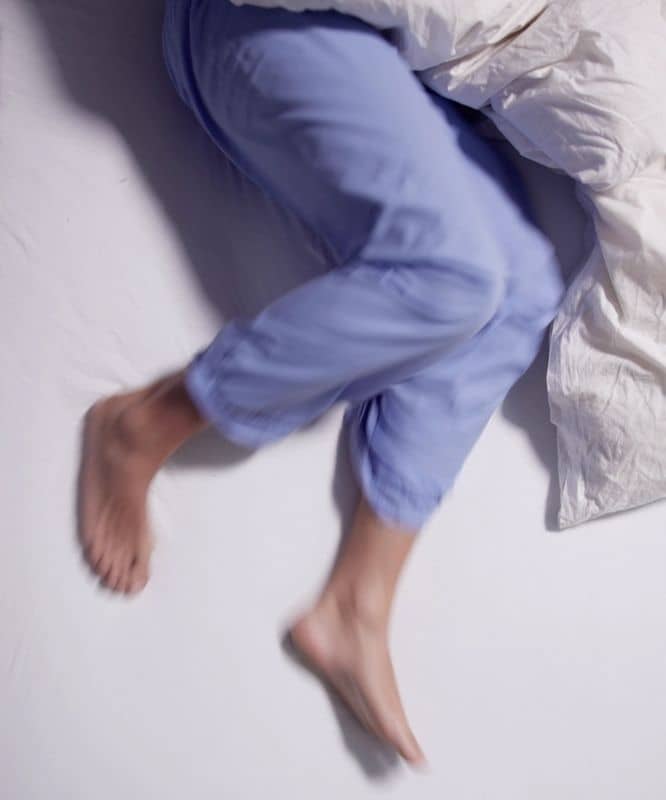
Restless Legs Syndrome is one of the most prevalent sleep-related movement disorders, affecting an estimated 5 to 10 percent of the adult population. It is characterized by an uncomfortable and often irresistible urge to move the legs, typically accompanied by unpleasant sensations described as creeping, crawling, pulling, tingling, or aching within the limbs. These sensations and the urge to move share four defining features:
- They occur predominantly at rest or during periods of inactivity
- They worsen in the evening or at night
- They are temporarily relieved by movement
- They cannot be explained by another medical or behavioral condition
The discomfort of RLS can make it extremely difficult to fall asleep, and it frequently leads to significant sleep deprivation and daytime impairment. RLS has both primary (idiopathic) and secondary forms. Secondary RLS is associated with iron deficiency, pregnancy, chronic kidney disease, and certain neurological conditions. Iron deficiency is among the most clinically actionable contributors — iron plays a role in dopaminergic function in the brain, and addressing deficiency can reduce symptom severity in many patients. Evaluating underlying contributing factors, including serum ferritin levels, is an important part of the diagnostic workup.
Sleep-Related Bruxism
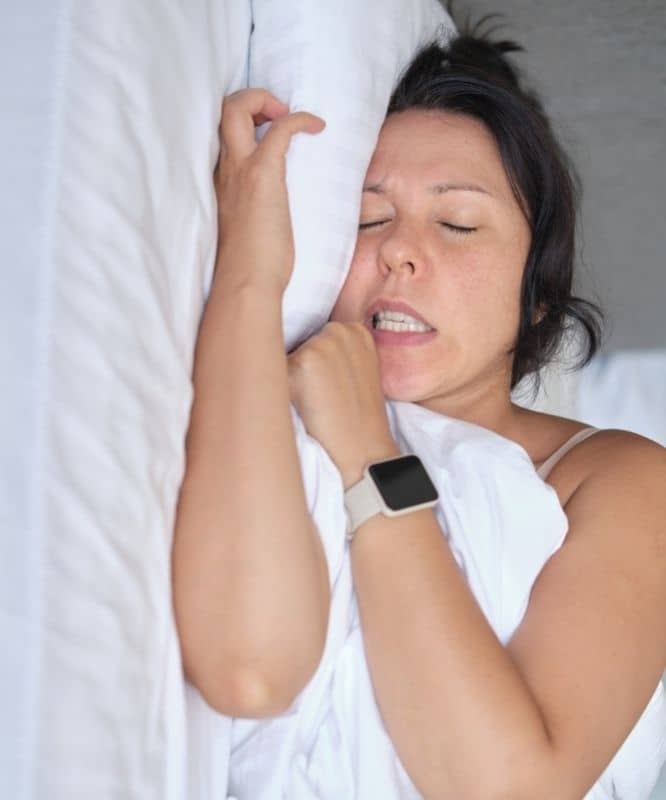
Sleep-related bruxism refers to repetitive grinding or clenching of the teeth during sleep. It is classified as a sleep-related movement disorder because it involves stereotyped muscle activity of the jaw and masticatory muscles that arises during sleep. Many patients are unaware of their bruxism until a bed partner notices the grinding sound, or until dental wear, jaw pain, or morning headaches prompt clinical investigation. Bruxism can be associated with a range of contributing factors, including:
- Stress and anxiety
- Obstructive sleep apnea, which may trigger bruxism episodes through sleep fragmentation
- Caffeine and alcohol use
- Certain medications, including some antidepressants
Untreated bruxism can lead to significant dental wear, temporomandibular joint dysfunction, and chronic facial pain. Management often involves a combination of dental evaluation, addressing contributing sleep disorders, and behavioral strategies.
Periodic Limb Movement Disorder (PLMD)
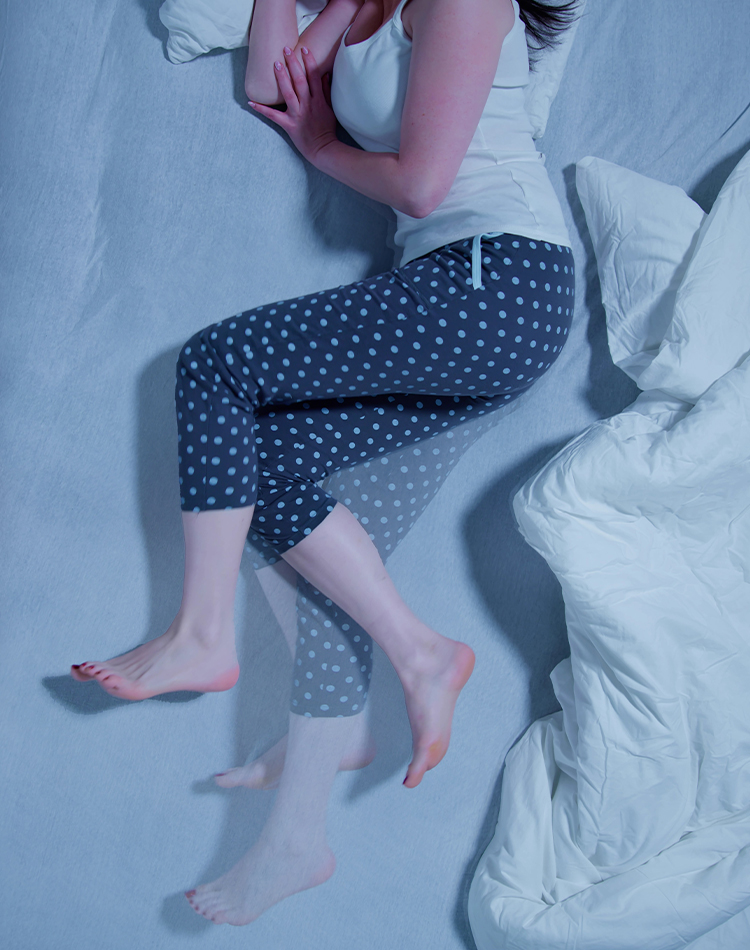
Periodic Limb Movement Disorder involves involuntary, rhythmic movements of the legs — and less commonly the arms — that occur during sleep. These movements typically consist of a repetitive flexion pattern at intervals of roughly 20 to 40 seconds. Unlike RLS, which is a wakefulness symptom driven by uncomfortable sensations, PLMD movements occur during sleep itself and the patient is usually entirely unaware of them. A bed partner may notice the repetitive kicking or twitching. Each movement episode can produce a brief arousal that fragments sleep without reaching full wakefulness, resulting in poor sleep quality and daytime fatigue that the patient may struggle to explain. PLMD is more common in older adults and is often identified during a polysomnogram.
Sleep-Related Leg Cramps
Sleep-related leg cramps are sudden, involuntary, and painful contractions of the leg muscles — most commonly the calf or foot — that occur during sleep or during the transition into sleep. Unlike the uncomfortable sensations of RLS, leg cramps involve a true muscular contraction that produces an acutely painful episode, often felt as a hard knot in the muscle, and typically resolves with stretching or walking. Episodes may last from several seconds to several minutes and can cause meaningful disruption to sleep. Contributing factors may include dehydration, prolonged sitting or standing, electrolyte imbalances, and certain neuromuscular conditions. Leg cramps become more common with advancing age and during pregnancy.
Clinical Variables Measured During a Sleep Study
When a patient with a suspected sleep-related movement disorder undergoes a polysomnogram, the following variables are evaluated to characterize the nature and severity of the condition:
- Arousal Index: The number of times per hour the brain briefly activates out of sleep. In PLMD, arousals are directly linked to limb movement episodes and are a key measure of how significantly the disorder is fragmenting sleep. An elevated arousal index often explains the fatigue and unrefreshing sleep that patients report.
- Sleep Architecture (N1, N2, N3, REM): The distribution of sleep stages across the night. Movement disorders frequently suppress deeper sleep stages, leaving patients in lighter, less restorative sleep. Reviewing sleep architecture helps providers understand the overall impact of the disorder on sleep quality.
- Sleep Latency: The number of minutes it takes to fall asleep. Particularly relevant in RLS, where uncomfortable sensations at rest can significantly delay sleep onset.
- Pulse Oximetry: Continuous monitoring of blood oxygen levels throughout the night. While movement disorders do not typically cause oxygen desaturation on their own, oximetry helps identify co-occurring sleep-disordered breathing, which is common in patients with movement disorders and can compound sleep disruption.
- Capnography: Measurement of CO2 levels during sleep to assess ventilation and exclude hypoventilation as a contributing factor to the patient’s symptoms.
- Sleep Hygiene: Behavioral and environmental factors are reviewed as part of every sleep evaluation. In movement disorders, relevant hygiene factors include caffeine and alcohol use, exercise timing, and sleep scheduling — all of which can influence symptom severity.

The Relationship Between Movement Disorders and Airway Health
Sleep-related movement disorders and upper airway conditions frequently coexist and can interact in clinically meaningful ways. There is a well-established overlap between Restless Legs Syndrome and obstructive sleep apnea, and some research suggests that treating OSA in patients with RLS can reduce leg symptom severity. Bruxism is also associated with the arousals and respiratory events of sleep apnea, and in some patients, addressing the breathing disorder leads to a reduction in bruxism episodes. Because Penn Medicine Becker ENT & Allergy specializes in upper airway evaluation and treatment, our team is well positioned to assess both the movement and breathing dimensions of a patient’s sleep, and to develop a management approach that addresses the full picture.
“I have suffered for multiple years with sinus issues and occasionally have trouble sleeping. Dr. Rosenstein was very patient, listen to my concerns and gave the best care and action plan. Since being a patient of Dr. Rosenstein, I’ve had minimal sinus issues and my sleep has improved. Very thankful and would highly recommend Becker ENT.”
— Lauren Olmo

convenient locations in NJ & PA
Frequently Asked Questions About
Sleep-Related Movement Disorders
What does Restless Legs Syndrome feel like?
Patients with RLS typically describe sensations that are difficult to articulate precisely — often using terms such as creeping, crawling, pulling, tingling, or an indescribable internal discomfort located deep within the legs. The defining characteristic is that these sensations create a compelling urge to move, and that movement temporarily provides relief. Symptoms are consistently worse in the evening and at rest, which is why they so frequently interfere with the ability to fall asleep.
How is Periodic Limb Movement Disorder diagnosed?
PLMD is diagnosed primarily through overnight polysomnography, during which leg movement sensors record the frequency and pattern of limb movements throughout the night. A Periodic Limb Movement Index of 15 or more events per hour in adults, combined with sleep complaints or daytime impairment, is generally considered indicative of clinically significant PLMD. Because patients are typically unaware of their movements, polysomnography is the most reliable way to identify and quantify the condition.
Is bruxism related to stress?
Stress and anxiety are among the most commonly identified contributors to sleep-related bruxism, though the relationship is not fully understood. Bruxism can occur in individuals without identifiable psychological stress, and not everyone under significant stress develops the condition. Other contributing factors include sleep-disordered breathing, caffeine and alcohol use, and certain medications. A thorough evaluation considers all potential contributors rather than attributing the condition to stress alone.
Can iron deficiency cause Restless Legs Syndrome?
Yes. Iron deficiency is one of the most well-established secondary causes of RLS. Iron plays a role in dopaminergic function in the brain, and reduced iron availability may contribute to the dysregulation that underlies RLS symptoms. Measuring serum ferritin levels is a routine part of the RLS evaluation, and addressing iron deficiency can reduce symptom severity in some patients. It is worth noting that ferritin levels considered adequate for general health may still be suboptimal for patients with RLS — your provider can help interpret results in the appropriate clinical context.
Should frequent leg cramps during sleep be evaluated by a doctor?
Occasional leg cramps are common and not necessarily a cause for concern. However, if cramps are occurring frequently, causing significant sleep disruption, or accompanied by other symptoms such as leg weakness, numbness, or swelling, an evaluation is warranted. Recurrent leg cramps can sometimes reflect an underlying condition — such as an electrolyte imbalance, peripheral vascular disease, or a neuromuscular disorder — that benefits from identification and management.
What sleep-related movement disorder treatment is near me?
If you live in New Jersey or Pennsylvania, Penn Medicine Becker ENT & Allergy offers evaluation and care for sleep-related movement disorders across multiple convenient locations. For a full list of offices, please visit our Locations page.