




Sleep Apnea Treatment
Sleep apnea treatment for disrupted breathing, snoring, and poor-quality sleep.
- Evaluation of airway anatomy and sleep-related symptoms.
- Personalized medical, device-based, and surgical treatment options.
- Care focused on better sleep and long-term health.
- Same-day or next-day appointments often available.








Important Medical Notice
The information provided below and throughout this website is presented for general educational purposes only and does NOT constitute professional medical advice. This information is NOT a substitute for professional medical advice and NO material on this site is intended to be a substitute for professional medical advice. Always seek the guidance of your doctor or other qualified health professional with any questions you may have regarding a health or a medical condition. Never disregard the advice of a medical professional or delay in seeking it because of something you have read on this website.

What is Sleep Apnea?
Sleep apnea is a chronic medical condition that can significantly impact an individual’s quality of life. It affects people of all ages, including children and adults. Sleep apnea has two main types, namely obstructive sleep apnea (OSA) which is more prevalent, and central sleep apnea (CSA) which is less common and typically associated with underlying medical conditions.
Types of Sleep Apnea
- Obstructive Sleep Apnea (OSA)
Obstructive sleep apnea is the most common type of sleep apnea. It occurs when the muscles in the back of the throat fail to keep the airway open, leading to repetitive breathing pauses during sleep. Individuals suffering from sleep apnea commonly encounter symptoms such as loud snoring, episodes of gasping for air, and disrupted sleep patterns.
- Central Sleep Apnea (CSA)
Central sleep apnea is caused by a failure of the brain to transmit proper signals to the muscles that control breathing. Unlike OSA, it is not related to physical obstruction of the airway. CSA is often associated with underlying medical conditions such as heart disease, stroke, or neurological disorders.
Symptoms of Sleep Apnea
Sleep apnea can manifest through various symptoms, including:
- Loud and chronic snoring
- Frequent awakenings during the night
- Daytime sleepiness and fatigue
- Morning headaches
- Difficulty concentrating and memory problems
- Irritability and mood swings
Risk Factors and Causes
Several factors contribute to the development of sleep apnea. These include:
- Excess Weight: Being overweight or obese increases the risk of sleep apnea due to the presence of excess tissue in the throat and neck area, which can obstruct the airway.
- Family History: People with a family history of sleep apnea are more likely to develop the condition.
- Age: While sleep apnea can manifest at any stage of life, it is more frequently observed among middle-aged and elderly individuals.
- Gender: Men are more prone to developing sleep apnea than women.
- Medical Conditions: Certain health conditions, such as heart disease and type 2 diabetes, increase the risk of sleep apnea.
Diagnosis and Sleep Study
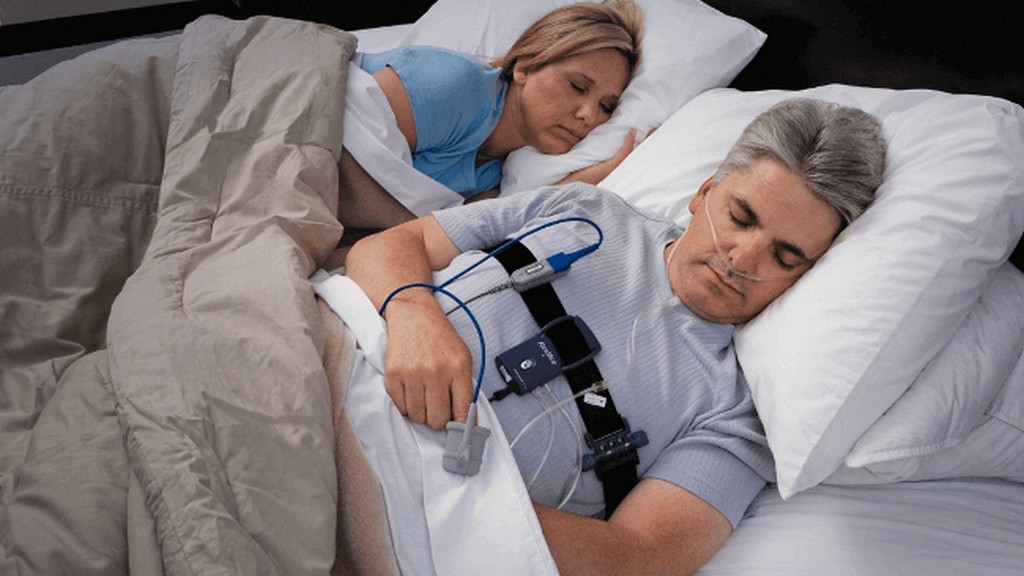
To diagnose sleep apnea, a sleep specialist may recommend a sleep study, also known as a polysomnography. During this test, various parameters such as breathing patterns, brain activity, heart rate, and blood oxygen levels are monitored while the individual sleeps. The results help determine the severity of sleep apnea and guide the treatment plan. In most cases, the sleep study can be performed at home with a device ordered by your physician and mailed to your home.
Common Treatments for Sleep Apnea
Several effective treatments are available for managing sleep apnea. The choice of treatment depends on the severity of the condition and the specific needs of the individual. Some common treatment options include:
- Continuous Positive Airway Pressure (CPAP): CPAP therapy involves wearing a mask over the nose or mouth during sleep, which delivers a continuous flow of air to keep the airway open.
- Oral Appliance Therapy: Custom-made oral appliances can help reposition the jaw and tongue, preventing airway obstruction during sleep.
- Lifestyle Modifications: Certain lifestyle changes, such as weight loss, regular exercise, and avoiding alcohol and sedatives, can improve sleep apnea symptoms.
- Surgery: In severe cases or when other treatments fail, surgical intervention may be necessary to remove excess tissue or correct structural abnormalities in the airway.

Select Surgeries and Procedural Treatment for Sleep Apnea
We offer a variety of advanced surgical and minimally invasive treatments designed to target the root cause of your sleep apnea. Browse the options below to discover which procedure might be the right fit for your needs.
Pillar Procedure
The Pillar Procedure is a minimally invasive treatment for mild to moderate OSA involving small implants in the soft palate. It’s performed in-office under local anesthesia and has minimal downtime. Studies support its effectiveness for selected OSA patients.
Tongue Base Treatment
In some OSA patients, an enlarged tongue base obstructs the airway. Treatments include Midline glossectomy and Radiofrequency ablation (RFA). Midline glossectomy is less common due to post-op complications. RFA can have mixed results and may require multiple treatments over weeks to months.
Tonsillectomy
Hypertrophy of the tonsils obstructs the oral airway and contributes to sleep apnea. Tonsillectomy may be necessary if it’s a significant obstruction source. Techniques to remove them vary and must be discussed with a surgeon.
Genioglossus Advancement
The genioglossus muscle can cause OSA when relaxed. It can be advanced forward via surgery to create more space in the oral cavity and oropharynx. Genioglossus Advancement is usually done with other procedures and has varying success rates.
Uvula Treatments
An enlarged uvula may cause snoring or OSA and can be surgically removed. It’s usually done with other procedures, like Pillar or tonsillectomy, as it alone may not solve the problem.
Hyoid treatment
Re-positioning the hyoid bone may treat SDB and OSA if it’s located backward. Hyoid suspension is combined with other techniques since it’s not a stand-alone surgery. The hyoid bone is horseshoe-shaped and is the only bone that’s not connected to another bone.
Uvulopalatopharyngoplasty (UPPP)
The traditional UPPP surgery involves removing the uvula, tonsils, and part of the soft palate to open up the airway. Although it offers varying success rates, it’s associated with significant pain and long recovery times. Nevertheless, it may be a good choice for some patients.
Inspire Treatment
Inspire therapy involves implanting an FDA-cleared neuro-stimulation device for patients with moderate to severe OSA who can’t use CPAP. As an alternative to CPAP, the device is implanted via 3 small incisions, typically as an outpatient procedure, and reduces apneic events per hour by over 75%. Before undergoing Inspire therapy, patients undergo a rigorous pre-procedure evaluation.
OSA patients have many treatment options, from weight loss and CPAP use to surgeries. Consult with your doctor to choose the best option for managing your OSA. Our telemedicine doctor is available to help.
Adopting Lifestyle Adjustments to Address Sleep Apnea
Sleep position, air pressure, and blood pressure all play an important role in managing sleep apnea. For instance, sleeping on your side can help open up the airways and reduce the risk of breathing pauses. Additionally, using a Continuous Positive Airway Pressure (CPAP) machine during sleep can help maintain adequate air pressure in the throat and keep it open. Finally, medications such as beta-blockers may be prescribed to control high blood pressure, which can worsen symptoms of sleep apnea.
In addition to the specific treatments mentioned above, making certain lifestyle changes can significantly improve sleep apnea symptoms and overall sleep quality. These changes may include:
- Maintaining a healthy weight through a balanced diet and regular exercise.
- Avoiding alcohol and sedatives, as they can relax the muscles in the throat and exacerbate sleep apnea symptoms.
- Practicing positional therapy by sleeping on the side instead of the back, as this can help keep the airway open.
- Managing nasal congestion and allergies as they can contribute to breathing difficulties during sleep.
convenient locations in NJ & PA
Frequently Asked Questions
About Obstructive Sleep Apnea
What is obstructive sleep apnea?
When the flow of air slows during sleep (reduced by at least 30%), this is known as hypopnea. When the flow of air stops completely during sleep (for at least 10 seconds), this is known as apnea. When these abnormal events (apnea and hypopnea) are due to obstructive, anatomic causes – often related to the collapse or blockage of the upper airway, a patient is considered to have Obstructive Sleep Apnea or OSA.
What are some of the anatomic causes of sleep apnea?
OSA is often due to obstruction along the airflow pathway. Common oral sites include the tongue base, soft palate, uvula, mandible (jaw), and tonsils. Nasal and nasopharyngeal sources such as the adenoids, septum, and inferior turbinates may also play a role. More inferiorly, the soft tissues of the neck may be predisposed to collapse and obstruction.
I have sleep apnea. Is it safe for me to drive?
OSA is the most common sleep-related breathing disorder, and it is well-documented to have a serious impact on a patient’s quality of life, work efficiency, and driving safety. One meta-analysis which evaluated the results of 18 other studies found untreated sleep apnea to be “a significant contributor to motor vehicle crashes.” The authors concluded that “…individuals with OSA are clearly at increased risk for crash.”
What are some of the health issues related to sleep apnea?
Untreated OSA may lead to hypertension, coronary artery disease, memory impairment, stroke, adult-onset diabetes, erectile dysfunction (men), as well as bed-wetting, behavior problems in children, obesity, and deficits in attention.
What is a “sleep study,” and what does it measure?
A sleep study should also be considered for patients who complain of snoring and who display signs or symptoms of OSA. While sleep studies measure many factors, some important measures include a patient’s oxygen saturation level and the number of times per hour that a patient slows or stops breathing.
What sleep apnea office is near me?
If you live in the states of New Jersey or Pennsylvania, Penn Medicine Becker ENT & Allergy Center offers sleep apnea treatment among its services. For a full list of services, please visit our locations page.