




Snoring & Sleep Treatment
Snoring and sleep treatment focused on identifying the cause of disrupted breathing and rest.
- ENT evaluation for snoring and sleep-related breathing concerns.
- Personalized treatment based on anatomy, symptoms, and sleep health.
- Medical, procedural, and surgical options when appropriate.
- Same-day or next-day appointments often available.








Important Medical Notice
The information provided below and throughout this website is presented for general educational purposes only and does NOT constitute professional medical advice. This information is NOT a substitute for professional medical advice and NO material on this site is intended to be a substitute for professional medical advice. Always seek the guidance of your doctor or other qualified health professional with any questions you may have regarding a health or a medical condition. Never disregard the advice of a medical professional or delay in seeking it because of something you have read on this website.
Impact of Snoring
Snoring is the noise produced during sleep when the flow of air through the mouth and nose is partially blocked. It occurs when the tissues in the airway vibrate, resulting in the characteristic sound. Snoring can range from mild to severe, and it can be an occasional occurrence or a chronic problem.
In addition to diagnosing and treating snoring, Penn Medicine Becker ENT & Allergy offers lifestyle advice on how to reduce snoring. Weight loss, avoiding alcohol before bedtime, and sleeping on your side can all help reduce the severity of the condition. Our team can also provide tips on how to improve your sleep hygiene so that you get a better night’s rest. With our expertise and dedicated care, we can help you find relief from snoring and get the quality sleep you deserve.

Snoring Facts
- About 45% of people in the US snore at least sometimes, and 25% of people snore regularly.
- 90 million Americans suffer from snoring, and as many as half of those may have the sleep disorder Obstructive Sleep Apnea (OSA).
- Snoring is the third leading cause of divorce in the US behind infidelity and financial issues.
- The percentage of adults in the United States who snore varies by age group and region:
By age group:
- 25-34: 19% snore, but do not have a partner who snores; 52% do not snore and do not have a partner who snores.
- 34-44: 18% snore, but do not have a partner who snores; 54% do not snore and do not have a partner who snores.
- 45-54: 23% snore, but do not have a partner who snores; 41% do not snore and do not have a partner who snores.
- 55-64: 29% snore, but do not have a partner who snores; 34% do not snore and do not have a partner who snores.
By region:
- Northeast: 23% snore; 12% snore and have a partner who snores; 20% do not snore and do not have a partner who snores; 45% do not snore but have a partner who snores.
- South: 23% snore; 16% snore and have a partner who snores; 18% do not snore and do not have a partner who snores; 43% do not snore but have a partner who snores.
It’s worth noting that snoring can be light and occasional, or it can be a sign of a more serious health condition like obstructive sleep apnea (OSA). If you or a loved one is experiencing disruptive snoring or other sleep issues, it may be worth speaking with a doctor to determine the underlying cause and explore treatment options.
Causes of Snoring
Several factors can contribute to snoring. Here are some common causes:
Obstructive Sleep Apnea (OSA)
OSA is a sleep disorder characterized by pauses in breathing during sleep. It is caused by the partial or complete blockage of the upper airway, leading to snoring and interrupted sleep patterns.
Nasal Passages and Nasal Congestion
Nasal congestion, caused by allergies, colds, or sinus infections, can obstruct the nasal passages, forcing individuals to breathe through their mouths and increasing the likelihood of snoring.
Throat Muscles and Excess Tissue
Weak throat muscles and excessive tissue in the throat can contribute to the narrowing of the airway, leading to snoring.
Sleep Position
Sleeping in a supine position can lead to the backward collapse of the tongue and soft throat tissues, causing airway blockage and the common issue of snoring.
Alcohol Consumption and Sedatives
Alcohol intake and sedatives relax the throat muscles, which can lead to increased snoring.
Excess Weight and Obesity
Excessive weight and obesity can contribute to snoring due to the accumulation of fatty tissues around the throat, narrowing the airway.
Nasal Polyps and Other Health Conditions
Nasal polyps, as well as certain medical conditions such as chronic allergies or asthma, can cause nasal congestion and contribute to snoring.
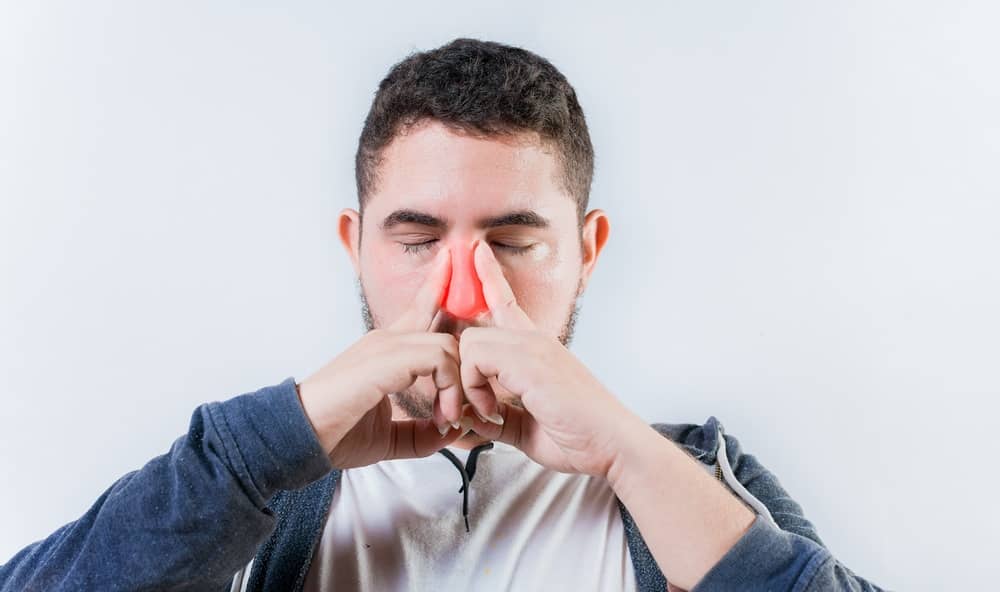
Impact of Snoring on Health
Snoring can have various impacts on overall health, including:
Sleep Quality
Snoring often disrupts sleep, leading to restless sleep patterns and poor sleep quality.
Cardiovascular Disease
Chronic snoring, particularly when accompanied by pauses in breathing, can increase the risk of developing cardiovascular diseases such as hypertension (high blood pressure) and heart disease.
Morning Headaches and Sore Throat
Individuals who snore frequently may experience morning headaches and a sore throat upon waking due to the strain on their respiratory system.
Relationship Strain
Snoring can create tension and strain in relationships, as the loud snoring may disturb the sleep of the snorer’s bed partner.
Treatment Options for Snoring
Fortunately, there are various treatment options available to alleviate snoring and improve sleep quality. These include:
Lifestyle Changes
Making lifestyle changes such as losing excess weight, avoiding alcohol intake, and practicing good sleep hygiene can significantly reduce snoring.
Nasal Strips and Nasal Sprays
Nasal strips and sprays can help to open up the nasal passages, reducing congestion and improving the flow of air.
Oral Appliances
Mandibular advancement devices and mouth guards can be worn during sleep to reposition the jaw and tongue, helping to keep the airway open.
Positive Airway Pressure (PAP) Therapy
PAP therapy involves using a machine that delivers a continuous flow of air through a mask, keeping the airway open during sleep. This is commonly used for the treatment of obstructive sleep apnea.
Surgical Procedures
In some cases, surgical intervention may be necessary to remove excess tissue or correct structural abnormalities in the airway. Procedures like the pillar procedure can provide long-term relief for chronic snoring.
Radiofrequency ablation (RFA)
Is a minimally invasive procedure that uses radiofrequency energy to reduce the size of enlarged tissues in the throat and help reduce snoring.
Anatomy of Snoring
As noted above, snoring occurs when the soft tissues of the upper airway vibrate due to turbulent airflow. This turbulence may occur at the level of the nose, mouth, or throat (Figure 1). In the nasal airway, a deviated septum (Figures 2 and 3), enlarged inferior turbinates (Figure 4), or nasal valve collapse may all lead to irregular and choppy airflow. Further back in the nasal airway, enlarged adenoids may also block the air entering the nose. When air flows in through the mouth, it may experience obstruction due to an enlarged tongue, a long soft palate or uvula, or enlarged tonsils. In some cases, the tongue, palate, uvula and tonsils are all normal in size, but are crowded and collapse in the oral airway as a result of a smaller than usual jaw (or mandible). Further down in the neck, excess soft tissue in patients with a “thick” neck may lead to blockage and turbulence.
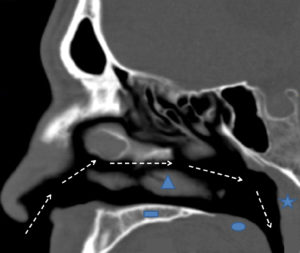
FIGURE 1 – Sagittal CT shows nasal airflow (dotted arrows) passing over inferior turbinate, hard palate, soft palate, and just in front of nasopharynx/adenoid area, before entering throat.
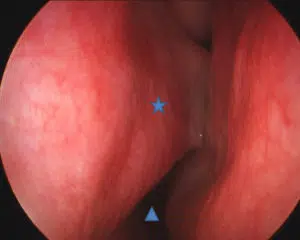
FIGURE 2 – Endoscopic view into the left nasal cavity shows obstruction of the nasal airway (triangle) by the deviated nasal septum (star). Obstruction leads to turbulent nasal airflow.
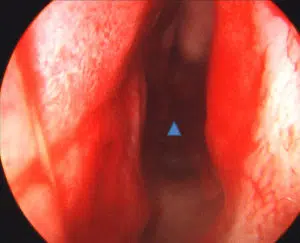
FIGURE 3 – Intraoperative view of the patient in FIGURE 2, showing the wide-open nasal airway (triangle) after straightening the deviated septum.
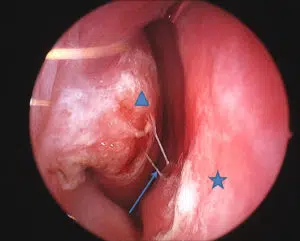
FIGURE 4 – Endoscopic view into the right nasal cavity shows obstruction of the nasal airway (arrow) by the enlarged right inferior turbinate (triangle). The nasal septum is also seen (star).

Into the nose

convenient locations in NJ & PA
Frequently Asked Questions About
Snoring Sleep
Can snoring be a sign of a more serious sleep disorder?
Yes, snoring can be a sign of obstructive sleep apnea, a sleep disorder characterized by pauses in breathing during sleep. It is important to consult a sleep specialist for a proper diagnosis.
Are there any natural remedies that can help reduce snoring?
Yes, certain natural remedies like steam inhalation, saline nasal rinses, and sleeping in an elevated position can help reduce snoring. However, it is essential to consult a healthcare provider for medical advice.
Can losing weight help alleviate snoring?
Yes, losing excess weight can help reduce snoring. Excess weight can contribute to the narrowing of the airway and the accumulation of fatty tissues around the throat, which can worsen snoring.
Are there any over-the-counter solutions for snoring?
Yes, there are over-the-counter nasal strips and nasal sprays available that can help open up the nasal passages and improve airflow. However, it is advisable to consult a healthcare provider before using them.
Why do I snore?
When we breathe (inhale and exhale), air flows in a smooth, laminar manner. Obstructions that occur along this pathway result in irregular, turbulent air movement. Air turbulence is often accompanied by loud vibrations of the upper airway structures – a sound we call snoring.
What are some of the anatomic causes of snoring?
Snoring is commonly associated with abnormalities of the soft palate or uvula. An overly long or floppy soft palate may vibrate irregularly with airflow. Other sources may also contribute to snoring, and for this reason, a careful and complete evaluation is imperative in order to direct effective treatment. Nasal sources (deviated septum, inferior turbinate hypertrophy, polyps, chronic and allergic nasal congestion), nasopharyngeal sources (enlarged adenoids and nasopharyngeal growths), oral sources (enlarged tongue base, small jaw, enlarged uvula or tonsils), and throat and neck sources (floppy neck soft tissues) may all contribute to snoring.
How common is snoring?
Snoring is widespread and is believed to affect as many as 50% of adults, including both men and women, over 45 million Americans. In one 2006 survey of over 2,000 British couples, 56% of respondents admitted that they snored (70% of men admitted to snoring; 40% of women admitted to snoring). 30% of the respondents stated that their bed partner snores. 48% of the respondents stated that snoring affected their personal relationships, with 46% of respondents admitting that they sleep in separate bedrooms as a result of snoring.
I am told that I snore at night. Is this why I am tired in the morning?
Drowsiness, irritability, and decreased libido may all be associated with snoring. It appears that snoring is independently associated with daytime somnolence and not merely a proxy for sleep apnea.
Does snoring affect my heart?
People who snore have been shown to have increased rates of hypertension (elevated blood pressure) when compared to those who do not snore. Studies have also documented a positive correlation between loud snoring and the risk of heart attack and stroke. One 2008 study found that “objectively measured heavy snoring is an independent risk factor for early carotid atherosclerosis and stroke.” Another study evaluated over 1500 patients who suffered acute myocardial infarcts (heart attacks) and found that “heavy snoring is associated with case fatality…in patients with a first acute myocardial infarction.”
What about snoring and diabetes?
In women aged 25-79 years old, one study found snoring with or without sleep apnea to be related to the presence of diabetes mellitus. This is of particular concern, as diabetes is strongly related to cardiovascular disease and early death. An earlier study supports these results, having found a two-fold higher risk of developing diabetes in women who snore compared to women who do not snore. Fortunately, there is some evidence that in diabetic patients with sleep apnea, diabetic parameters improve when patients' sleep apnea is brought under control.
Are there any risks of snoring specific to women?
For women of childbearing age, snoring and witnessed sleep apnea appear to be related to such complications during pregnancy as pre-eclampsia. One study found that women who snore during pregnancy have an increased incidence of pregnancy-induced hypertension and that snoring may indicate a risk for growth retardation of the fetus. The presence of OSA seems to increase significantly in women who have gone through menopause, although this risk may decrease with hormone replacement therapy.
What treatment for snoring & sleep office is near me?
If you live in the states of New Jersey or Pennsylvania, Penn Medicine Becker ENT & Allergy Center offers treatment for snoring & sleep among its services. For a full list of services, please visit our Locations page.